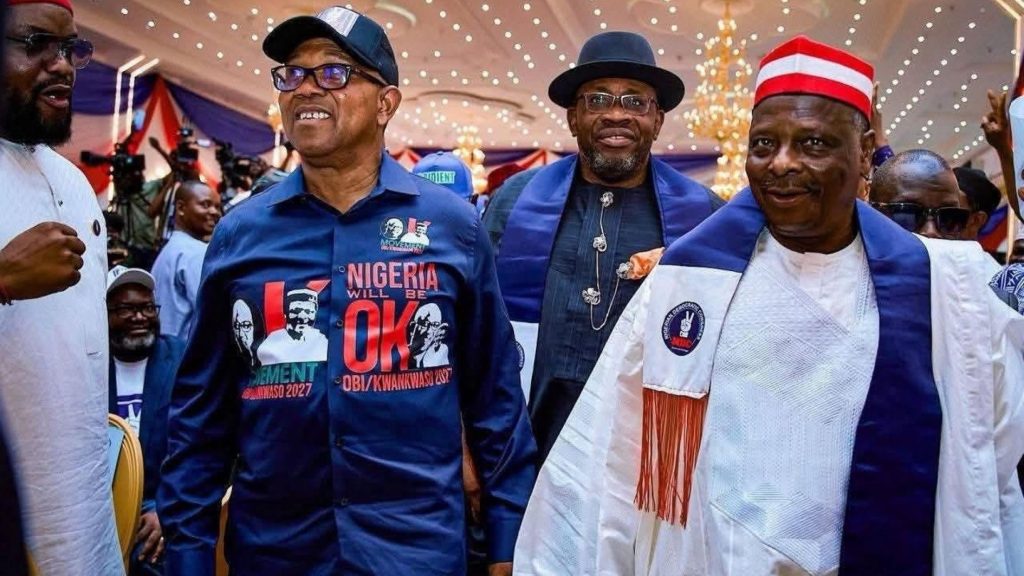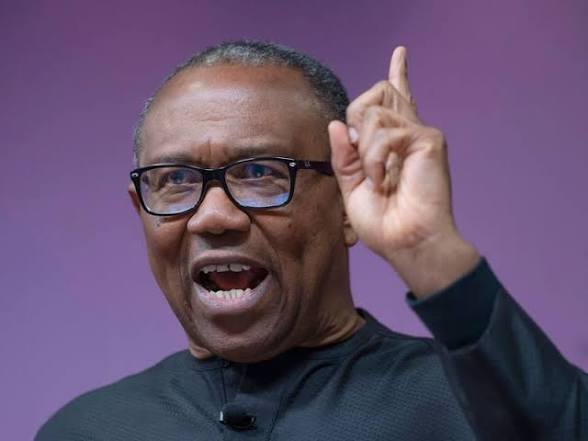
Photo : Mr Peter Obi
By Emmah Uhieneh
In the turbulent theatre of Nigerian politics, where power has often rotated among entrenched interests, familiar political dynasties, and deeply rooted patronage networks, the emergence of Peter Obi represents something profoundly unsettling to the old order.
He is not feared merely because he contested an election. He is feared because he embodies a possibility — the possibility that governance in Nigeria can be redefined around competence, accountability, prudence, productivity, and measurable development rather than political theatrics and elite entitlement.
For decades, Nigeria has operated within a political ecosystem where excessive public spending, weak institutional discipline, opaque governance, and transactional politics became normalized. In such an environment, a figure like Peter Obi naturally becomes disruptive.
His political identity was built not on flamboyance, ethnic militancy, or populist noise, but on fiscal discipline, administrative restraint, and developmental emphasis. That alone makes him unusual in Nigeria’s political architecture.
Little wonder many believe the incumbent administration is uncomfortable with his growing political ambition and expanding national appeal.
Obi’s ability to turn the tide, reshape political conversations, and energize previously apathetic citizens has become one of his greatest advantages. His rise has altered the psychology of opposition politics in Nigeria, making him a rallying point for millions seeking an alternative to the established order.
Consequently, supporters often argue that the increasing political maneuvering, internal crises, and waves of litigations engulfing opposition parties are not entirely accidental, but part of broader efforts to weaken alternative political structures before 2027.
To many within the political establishment, Obi has become a nightmare because he does not fit into the traditional mold of Nigerian politics.
He is widely seen as a 21st-century political phenomenon — a politician whose influence is driven less by state structures and more by organic public enthusiasm. His grassroots connection, especially among youths, professionals, traders, artisans, and the urban middle class, appears unprecedented in recent Nigerian political history.
Unlike conventional politicians whose influence often depends heavily on governors, political godfathers, or massive patronage machinery, Obi’s strength largely comes from ordinary citizens emotionally invested in the possibility of national rebirth.
That organic support is precisely what makes him formidable. Political establishments are usually comfortable confronting opponents they can predict, negotiate with, or politically isolate.
Obi represents something harder to contain: a movement sustained by public frustration, economic hardship, and a generational hunger for competent governance.
His supporters see him not merely as a candidate, but as a symbol of resistance against waste, corruption, impunity, and elite domination.
What makes Obi particularly formidable is that his appeal transcends traditional political calculations.
Nigeria has historically been divided along ethnic, religious, and regional lines, with politicians often relying on those divisions to build electoral coalitions. Yet Obi’s 2023 presidential campaign altered the national conversation. He mobilized a generation of young Nigerians, professionals, entrepreneurs, students, and members of the middle class who had long disengaged from politics out of frustration and hopelessness.
His supporters saw in him not perfection, but discipline, restraint, and seriousness — qualities many Nigerians believe have been absent in governance.
This is the source of the anxiety surrounding him. A politician who inspires ideological loyalty rather than transactional loyalty becomes difficult to control.
A politician whose support base is driven by conviction instead of patronage disrupts the old political equation.
A politician who consistently emphasizes data, productivity, investment, and prudence threatens a culture built around political excess and dependency.
Peter Obi’s tenure as Governor of Anambra State remains central to his credibility.
Supporters point to his emphasis on education, prudent resource management, infrastructural improvement, and savings culture. He left office with a reputation for financial caution and institutional order.
While critics may dispute aspects of his record or argue that governance outcomes were not perfect, even many opponents acknowledge that he cultivated the image of a careful manager of public resources. In a country burdened by allegations of corruption and reckless public expenditure, that reputation carries significant political weight.
Beyond governance, Obi possesses another rare political asset: perception of personal simplicity.
Nigerians have become deeply cynical about leadership excesses. Thus, a politician perceived as modest, accessible, and financially prudent naturally resonates with a weary population.
Whether boarding commercial flights, speaking the language of enterprise, or discussing economic productivity, Obi projects himself as a leader more interested in national rebuilding than elite spectacle. That image has become part of his political capital.
As things stand today, many political observers believe Peter Obi remains one of the strongest opposition figures ahead of 2027 and arguably the man to beat if the opposition can build cohesion around a common purpose.
His growing national acceptability, especially among younger voters and urban populations, continues to unsettle the traditional political establishment. The fear is not merely about electoral numbers; it is about momentum, emotional connection, and the dangerous power of public belief.
But can he truly transform Nigeria? That question demands honesty rather than romanticism.
No single leader, regardless of brilliance or popularity, can magically solve Nigeria’s complex structural problems overnight.
Nigeria’s challenges are deeply rooted: insecurity, institutional decay, unemployment, corruption, infrastructural deficits, weak industrial capacity, policy inconsistency, and ethnic distrust. Rebuilding such a nation requires more than charisma; it requires political courage, competent teams, institutional reforms, national consensus, and sustained discipline.
However, what Peter Obi undeniably offers is a different governing philosophy. He belongs to a school of thought that prioritizes production over consumption, investment over waste, competence over propaganda, and measurable outcomes over political slogans.
He repeatedly argues that Nigeria cannot continue functioning as a sharing economy dependent almost entirely on oil revenues while neglecting manufacturing, agriculture, technology, exports, and human capital development.
His supporters believe that this philosophy could restore national pride and reposition Nigeria globally. They argue that countries become respected not because of population size or natural resources, but because of leadership vision, institutional stability, industrial productivity, and economic discipline.
In that regard, Obi’s rhetoric consistently aligns with the developmental trajectories followed by nations that transformed themselves through investment in education, enterprise, and industrialization.
Can he restore Nigeria’s glory and patriotism? Potentially, yes — if such restoration is understood not as emotional nationalism but as rebuilding citizens’ trust in governance.
Patriotism flourishes when citizens believe their sacrifices matter, when institutions work, when merit is rewarded, and when leadership inspires confidence rather than despair.
Many of Obi’s admirers see him as capable of rekindling that trust because he speaks directly to economic productivity, national responsibility, and accountable governance.
Yet his greatest strength may also be his greatest challenge. Expectations around Peter Obi have become extraordinarily high.
To many supporters, he symbolizes hope itself. But governing Nigeria requires navigating entrenched political interests, balancing regional sensitivities, managing powerful economic actors, and confronting systemic resistance. The same establishment allegedly uncomfortable with his rise would not suddenly disappear if he attained higher office. Reform in Nigeria is rarely resisted quietly.
Still, history often moves forward because certain individuals compel societies to imagine alternatives. Peter Obi’s political significance lies not only in elections won or lost, but in the consciousness he awakened among millions of Nigerians who began demanding competence, transparency, and accountability as non-negotiable standards of leadership.
That is why he remains consequential. That is why he remains controversial. And that is why many within the traditional political establishment remain uneasy around him.
They are not merely confronting a politician.
They are confronting the dangerous possibility that Nigerians may someday insist on a country that actually works.